

Where Better Recall Begins
Preserve the memories that matter to you using principles from memory science
Improve your memory in about 2 minutes a day
HippoCamera was designed to mimic the hippocampus, a seahorse-shaped part of your brain that’s responsible for taking recent memories and making them last for the long term. Research shows that the hippocampus plays back memories on a speeded basis to other parts of your brain to consolidate those memories. Over time, a person’s hippocampus can become less effective, and that’s where HippoCamera comes in.
HippoCamera guides you to record and replay rich memory cues from life events using established principles from the science of learning and memory. Research showed it sharpened activity in the hippocampus and produced an average gain of over 50% in memory recall for the unique details of these events.
Record
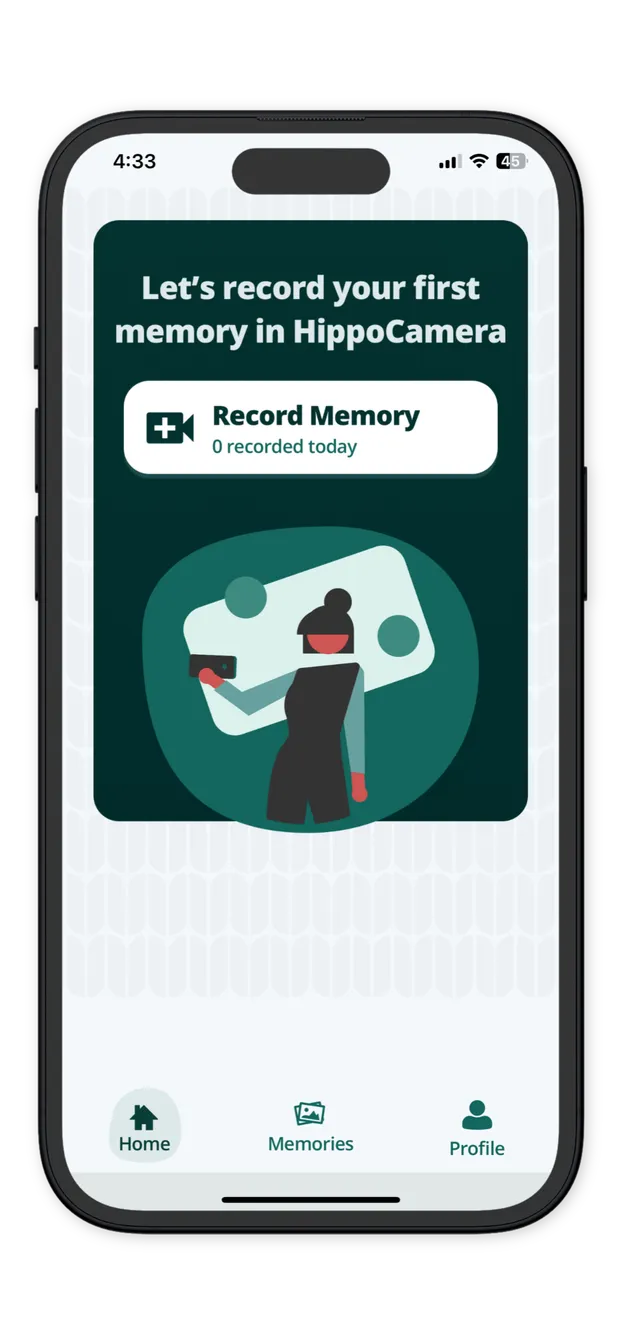
Capture a moment to remember—create a memory cue with a short video and your voice.
Replay
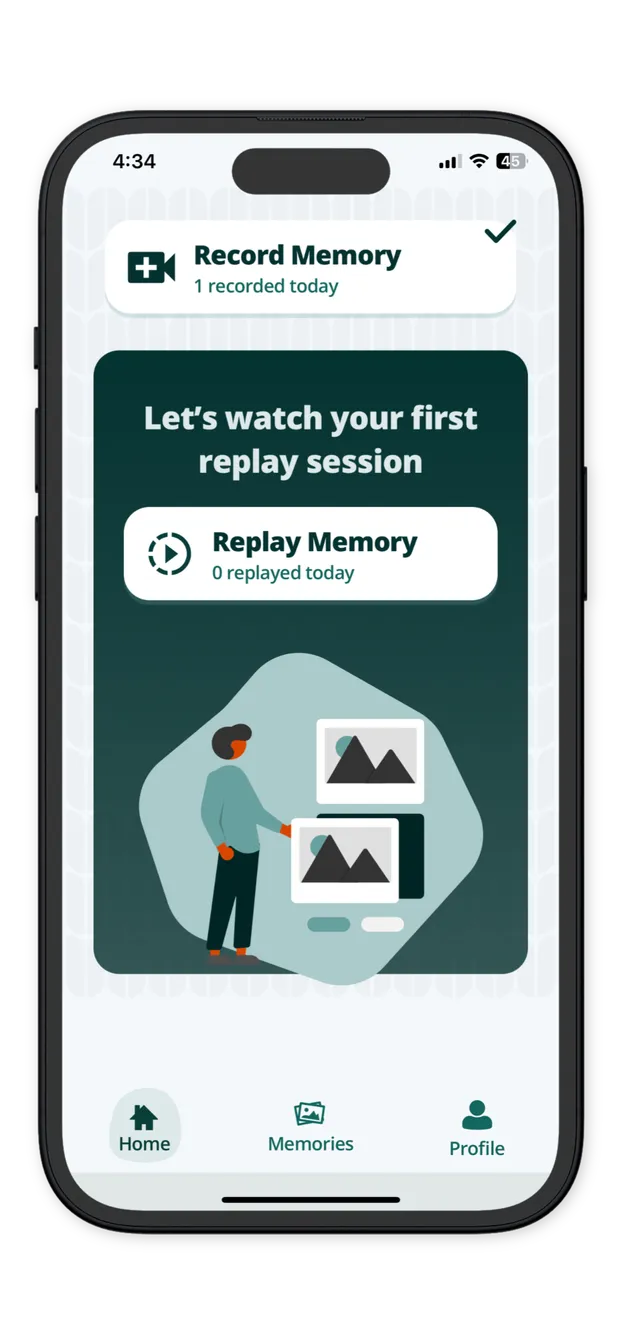
Review your memories on an optimized schedule—similar to the way that the hippocampus consolidates our memories.
Remember
Strengthen memory for the events of your life—it’s more effective than just recording and replaying regular videos.






What makes HippoCamera different?
HippoCamera is grounded in decades of research, built on foundational neuroscience and proven learning principles.
Click/tap on an item to view more details
Intentional Encoding
The simple act of indicating that an event is worth remembering boosts memory and helps users pay better attention to the events of their lives.
Self-generated cues
Self-generated cues leverage personal knowledge and are better memory triggers than cues made by someone else.
Multimodal cues
Cues with multiple modalities are more effective in cueing a rich re-experiencing of the event.
Memory prioritization
Memory is prioritized for events that users explicitly indicate they want to remember.
Distributed learning
Learning is best when broken into several short sessions distributed over time, compared to a single long session.
Orienting in space and time
Events that share temporal context can cue one another.
Hippocampal replay
The hippocampus repeatedly plays back memories at high speed to “teach” them to other areas of the brain for long-term storage.
Create associations across distinct events
Memories do not exist in isolation. Like links in a chain, one memory in a replay session cues other related memories.
Sources:
1 Neill et al. (1990). J Exp Psychol Learn Mem Cogn, 16(3)
2 Mäntylä & Nilsson. (1988). J Exp Psychol Learn Mem Cogn, 14(3)
3 Thompson & Paivio. (1994). Can J Exp Psychol, 48(3)
4 Cowan et al. (2021). Psychon Bull Rev, 28
5 Ebbinghaus. (2013). Ann Neurosci, 20(4)
6 Robin, Wynn, & Moscovitch. (2016). J Exp Psychol Learn Mem Cogn, 42(2)
7 Cai et al. (2016). Nature, 534
8 Carr, Jadhav, & Frank. (2011). Nat Neurosci, 14
9 Raaijmakers & Shiffrin. (1981). Psychol Rev, 88(2)